
The bravado of NDA ministers may have undone the gains made in cross-border security cooperation over the past several years.

'The army has been open about its determination to keep the PML-Nawaz out of power at all costs.' 'Both the military and the higher judiciary have indicated a preference for Imran Khan's Pakistan Tehrik e Insaaf,' says Rana Banerji, who headed the Pakistan Desk at the Research and Analysis Wing, India's external intelligence agency.

'He was carrying his Indian passport. This seems like a very different sort of spy than the ones we see in movies, who carry fake passports and are highly trained,' says Aakar Patel.
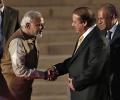
Prime Minister Narendra Modi has brought Hindi into vogue in the external affairs ministry and managed a diplomatic coup by inviting SAARC leaders, including Nawaz Sharif, to New Delhi for his swearing-in. Sheela Bhatt's impressions of the Indian prime minister's first day in office.
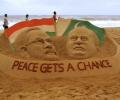
Narendra Modi has sent across a very strong message to the states that they may have their concerns but not the last word on foreign policy, former chief of the Research and Analysis Wing C D Sahay, tells Vicky Nanjappa.

India isn't Israel, nor can it, or should be, says Shekhar Gupta.

'The CIA would not need to engage a maid who has no access to any information. They can buy a politician in India for much lesser cost and have more access to information. Trust me, that happens,' Amar Bhushan, former head of R&AW's counter-espionage section, tells Rediff.com's Vicky Nanjappa.

He has been removed from the high-profile post on the charges of corruption and dereliction of duty making him the first chief in the history of the agency to face such action.

Strobe Talbott's tweet that hijackers may have wanted to use the missing Malaysian flight to attack Indian cities should be seen in the context of Lashkar-e-Tayiba's long standing plans to attack Indian cities like Delhi, Bangalore and Chennai from the skies. Vicky Nanjappa reports.

'One of R&AW's greatest achievements is in projecting itself as benign.' 'This work -- done in tandem with the Diaspora and the MEA -- sells a story of India as mostly the victim.'
'We have to hit Pakistan in such a manner where it hurts them the most.'

Former chief of R&AW C D Sahay dismisses comments linking the Gujarat riots and Babri Masjid demolition to the formation of the Indian Mujahideen

Hein Kiessling has the kind of access in Pakistan that journalists (and spies) would die for, says Kanika Datta.

Review: Saif and Katrina make Phantom a joke
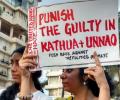
'They have no other agenda, but to perpetuate hate.' 'They have destroyed the economy and polity and they survive only on hate.' 'They think through hatred, they can mobilise the large chunk of Hindu votes.'

Yakub Memon's mercy petition was rejected hours before he is scheduled to hang by a three-member bench amid high drama that saw the Supreme Court throwing its doors open in the middle of the night in an unprecedented move.

Barring any last-minute reprieve, Yakub Memon, the lone death row convict in the March 12, 1993 Mumbai blasts case, will be hanged at 7 am on Thursday morning.

A secret document provided by National Security Agency whistleblower Edward Snowden reveals that only 1 billion of the 1.35 intercepts that the US snooped on are terror related, the rest a breach of privacy. Vicky Nanjappa reports
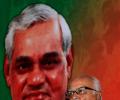
'Advani went by the book, by files, by advice given by his babus. He may be well read and articulate and a pleasant conversationalist, but none of that makes for the kind of creative politician that Vajpayee was.' 'This is the kind of observation about the Vajpayee premiership, more than the promise of espionage or Kashmir gossip, that made writing A S Dulat's book a satisfying experience,' says Aditya Sinha.
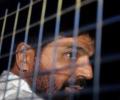
'The cooperation of Yakub with the investigating agencies after he was picked up informally in Kathmandu and his role in persuading some other members of the family to come out of Pakistan and surrender constitute, in my view, a strong mitigating circumstance to be taken into consideration while considering whether the death penalty should be implemented,' B Raman had written in August 2007.

The oil mafia sheltered the 10 Pakistani terrorists in Machhimarnagar in Colaba and in fact a woman even showed Ajmal Kasab and his accomplice the way to Cama and Albless Hospital. The many theories floated before the Ram Pradhan committee, that looked into the attacks.

India questioned the functioning of Pakistan's notorious military courts.

"Talks are the only option," Mehbooba said. "How long can you have a confrontation?"
'But India, increasingly, is not that far behind, which is a story I never expected to tell.'

Friday's incident at Herat has dampened somewhat the spirit behind the invitation. It reminds Modi much before he officially becomes prime minister, of the challenge that awaits his government, says Sheela Bhatt/Rediff.com

Any NGO critical of the government is unlikely to receive a green signal. The new amendment will leave NGOs vulnerable to harassment. It was the NGO sector that helped provide compassion and food to millions of people during the lockdown. The new Bill will render such cooperation and camaraderie impossible in future, observes Rashme Sehgal.
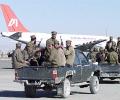
'Narendra Modi is a beginner on the national scene. Intelligence and security will be new for him on a national scale. He will succeed if he crosses the bureaucratic barriers. If he entangles himself in these barriers, then I highly doubt he will succeed,' former R&AW agent R K Yadav tells Rediff.com's Vicky Nanjappa.
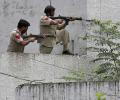
'The target for all our counter-terror operations ought to be Pakistani Punjab's population,' argues Colonel Anil A Athale (retd).

'A master politician who excelled in the politics of intrigue, Subash Ghisingh kept winning election after election, sending a clear message to the state and central governments that he remained the undisputed king of the Darjeeling hills.'

'He knows India is going nowhere.' 'India will never let go of Kashmir, so he wants to settle with India.' 'Settle honourably with peace, dignity and justice.'

'Kulbhushan Jadhav is a very sad case.' 'I think Pakistan handled this issue very clumsily.' 'They gave too much of publicity and also said that they will hang him.' 'Now obviously, they are not going to hang him.'

The counter-insurgency operation on the Indo-Myanmar was under planning for the last three months. The June 4 ambush that killed 18 Indian soldiers only hastened the attack. Sheela Bhatt provides exclusive details of the planning for the operation.

'Against the backdrop of difficult administrative, political and economic problems, Imran's temperament and staying power will be the subject of intense expectation and public scrutiny,' says Rana Banerji, who headed the Pakistan Desk at the Research and Analysis Wing, India's external intelligence agency.

The clichd path of conducting 'uninterrupted and uninterruptable' bilateral dialogue with Pakistan to improve ties remains unimplemented and un-implementable under prevailing circumstances that are unlikely to alter in the near future, says Rahul Bedi.

'Engagement should never stop.' 'Reassure Kashmiris that they will be treated at par with the rest of India.' 'The peace you crave will be peace with honour.' 'Your special status will not be tinkered with.'
Calculated or otherwise, if Azhagiri's firing of the first salvo after Karunanidhi's death does not create some space for him to politico-electorally exploit at a later date, there may not be any space left for him at all, says N Sathiya Moorthy.

'They have realised that class war is not possible in India, so they are trying to bring about a caste war.'

Saroj Kumar Rath, author of the newly-published book Fragile Frontiers: The Secret History of Mumbai Terror Attacks, speaks to Rediff.com's Vicky Nanjappa.

When people say the two-day visit was been successful in taking back the bilateral relationship to the political plane, essentially the reference (mostly left unsaid) is to the wresting of initiative from the intelligence 'agencies', whose meddling had hurt bilateral ties, says the distinguished editor Kanak Mani Dixit.

'Dulat's professional successors in the game would now find it that much harder to access/create meaningful sources/assets needed for effective functioning in a place like Kashmir. By blowing their cover the former top spy has undone whatever he might have been able to add to his organisation's resource kitty.'
